Rain Towers, Puddle Maps and the Sodden Set: Dressing UK Exteriors for 2026
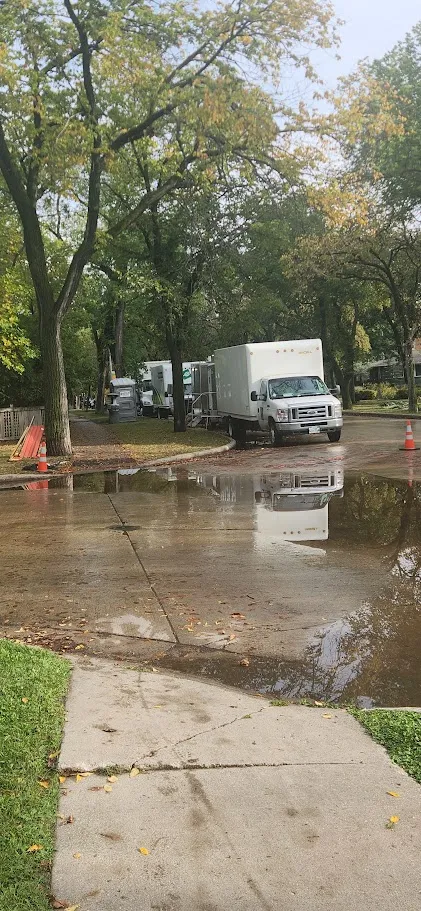
Photo: McCIrishman, CC BY 4.0, via Wikimedia Commons
A wet November high street should be easy. It is Britain. It rains. But a screen rain scene is not weather; it is a prop with a water supply, a drainage plan and a continuity photograph. By 4pm the light is going, the dressing is sodden, and someone is asking whether the puddle on the left was there in the last take. This is the quiet craft of dressing UK exteriors for a rain-soaked 2026 shoot.
Start With Drainage, Not Dressing
The first mistake on a wet exterior is treating water as a dressing problem. It is a drainage problem. Walk the site after real rain before you walk it with a van full of furniture. Find where water pools, where it runs, where it stains. A puddle that looks atmospheric on camera can be sitting on top of a blocked gully that will back up by lunch.
On a small production, that might mean a wet vac, two buckets and a length of hose. On a larger job, it means a sump pump, sandbags and someone whose job is to watch the water level. If the set floods, the dressing floats. No amount of fake rust survives a floating sofa.
Fake Rain That Reads as Real
Rain towers and rain bars are the obvious kit, but the difference between screen rain and a garden hose is filtration, pressure and backlight. Rain needs to be clean enough not to leave grit on a costume, and it needs to fall in a direction the camera can see. A rain tower is only as good as its drainage plan and its wind break.
Small crews can still get a convincing wet-down with a garden sprayer, a rose attachment and a lot of patience. Hire a rain bar if the budget stretches. Use real rain when it comes, but do not pretend you can control it. Real rain is free and uncontrollable; fake rain is expensive and still not entirely controllable. The call sheet should know the difference.
The Puddle Is a Character
Puddles have continuity. They have position, depth, reflectivity and a lifespan. A puddle map is exactly what it sounds like: a photographed plan of where water sits, marked with tape and notes. Shallow trays lined with pond liner can hold a puddle in place. A spray bottle tops it up between takes. A dash of glycerin can slow evaporation, but test it on paving first.
The puddle in the wide shot must be the puddle in the close-up. If it moves, it is not a puddle; it is a continuity error with a reflection.
Rust, Moss and the Sodden Sign
Weathering maps matter more outside. Rust is not a single colour. Use iron filings, vinegar and salt on steel, then seal it with a matte varnish so the rain does not wash the story away. Acrylic glazes give you control. Tea stain gives you age. Moss can be preserved moss, a moss slurry on porous surfaces, or a green scouring pad cut to shape when time is short.
Sodden signage is a classic. Print on waterproof paper, use a matte laminate, and age it before you seal it. A sign that looks wet but is not will survive lunch. A sign that is actually wet will disintegrate on the third take and take the art department's afternoon with it.
Between Takes: Covers, Heat and the Overnight
Covers are not glamorous. Tarpaulins, marine ply, weighted edges and a plan for who takes them off. Do not wrap wet wood in plastic and leave it overnight; it sweats. Use dehumidifiers in a tent, silica in a box, and a cloth for the things that only need a wipe. WD-40 on metal between takes is cheaper than a rebuild.
Overnight, leave the drainage working. A dehumidifier is cheaper than a new hero dressing. A dry store is not a luxury on a wet exterior; it is the difference between a six-week shoot and a six-week rescue mission.
The Schedule Is Part of the Dressing
In November, sunset is a deadline. A 3pm rain scene is really a 1pm rain scene with a hard stop. Shoot wet scenes first, then dry scenes, then the wide that can tolerate a damp pavement. Build in a weather day. If you cannot control the sky, control the call sheet.
Takeaways for Small and Large Crews
Small productions: two buckets, a garden sprayer, a tarp, pond liner, tea, patience and a phone full of reference photographs. Large crews: rain tower, water bowser, pump, heated tent and a dedicated wet-dressing assistant. Both: photograph everything, label everything, and never dress a set before you know where the water goes.
The weather is a prop. Treat it like one.