The Bell Above the Door: Dressing a Corner Shop That Works for Its Living
A corner shop on screen is rarely just a shop. It is the place where bad news gets overheard, where a character buys a lighter and avoids a conversation, where the plot turns on whether the lottery ticket is still under the counter. That means the set has to work harder than its square footage suggests. It needs hours, habits and customers, even when the extras are standing still. The job is not to make it look old or quaint. The job is to make it look used by specific people at specific times of day.
Start With Opening Hours, Not Shelves
Before you order a single gondola, decide when this shop opens and who comes through the door first. A 6am opener needs a newspaper rack near the entrance, a milk crate waiting to go out, a lottery sign already switched on. A shop that trades until 11pm needs a different front-of-house: hot food unit, phone top-up cards, parcel drop-off stickers, a security mirror angled towards the door. Those early decisions shape everything else.
Layout should follow sightlines. Stand at the door as the character would. What do they see first? The counter, hopefully, but also the thing the shop wants them to buy. Impulse lines near the till. Slower lines at the back. Bulk items low. The floor should have a route through it, not just a gap between shelves. A real shop is a small machine for moving people past stock.
Shelf Logic Is a Script
Shoppers in the UK buy in missions: dinner, fags, hangover, kids, top-up, something for the train. Group stock by those missions and the set starts to feel intelligent. Top shelves hold slower sellers and bulk. Bottom shelves hold bigger bottles and multi-packs. The middle is where the money is, at eye level.
Do not dress every shelf to the same fullness. A real shop has gaps, facings pulled forward, one lonely flavour left. Use a planogram that is about 80 per cent full, then break it. Alternate branded and own-label packaging. Mix recognised UK names with generic cereal boxes and crisps that look plausible but are not real products. If you are using real brands, check clearances early and do not make the hero shot all about one logo.
Shelf edges matter. Price rails with handwritten reductions, a yellow sticker or two, a laminated offer card that has curled at the corner. Behind the counter, the tobacco gantry should read as compliance-heavy and slightly cramped. Lottery terminal, scratchcard dispenser, cigarette papers, vape refills. An age verification sign. A rota pinned up badly. These are not background; they are character details.
The Counter Does the Talking
Counter dressing is where most sets either convince or collapse. The till, card machine, charity box, pen pot, clipboard, delivery book, rubber bands, lighter tub, lottery slips, a cloth for wiping the counter. It should look like a workspace, not a styled flat-lay. Everything within reach of the person who stands there for eight hours.
Under the counter, keep it practical: carrier bags, cleaning spray, first aid kit, spare till roll. On the counter, let wear show. The laminate edge should be lighter where hands rest. Till keys should be shiny. A card machine held together with a sticker. A small convex security mirror above the cigarettes, angled to catch the aisle. A grey CCTV monitor that nobody watches unless something goes missing.
The door bell is a prop in its own right. It is also a sound cue. On a film set, the art department may not own the sound, but the look of the bell, the wire and the bracket all help the sound team and the actors believe the space. If the bell is fake, make it a good fake.
Fridges, Glow and the Back Wall
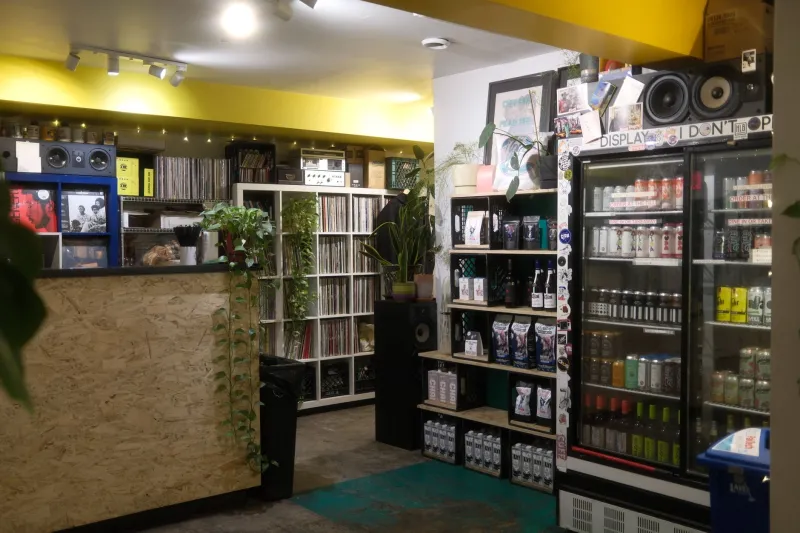
Fridges are the corner shop's neon. They glow, they hum, they anchor the back wall. If the budget allows, use real catering fridges and dress the glass with promo stickers and opening-hours decals. If not, build light boxes with shelf risers and product facings. The important thing is that the glow looks like it comes from inside the fridge, not from a lamp hidden behind the set.
Door seals, handles and rubber gaskets take a beating in real life. Make the fridge handles grubby. Put a mop and bucket nearby. A cardboard box flattened on the floor. A stack of crates waiting to go back. The back wall should feel like the part of the shop the customer sees but the owner uses.
Wear Patterns Beat Random Grime
Dirt is not automatically realism. Wear is. A threshold worn in a diagonal line from the door. A push plate on the door glass. A counter edge that is lighter than the rest. Fridge handles with fingerprints. Shelf fronts scuffed where baskets and hands catch them. Lino worn through in the walking route. These patterns tell the audience where people go and what they touch.
Do not make the shop look like a museum of 1970s retail unless that is the story. A believable corner shop in 2026 sells phone repairs, parcel drop-off, vapes, charging cables and lottery tickets. The window should be busy but not chaotic: opening hours, lottery signage, a poster for a local takeaway, a card in the window for a missing cat. A noticeboard inside can carry minicab cards, council notices and a takeaway menu that has been there so long the corner has curled.
UK Sourcing Notes
Prop houses and cash-and-carries are useful, but do not overlook charity shops, Facebook Marketplace and local retailers clearing old stock. Ask shopkeepers for expired stock and empty packaging. Catering salvage yards are good for fridges and shelving. DIY stores will sort you out for security mirrors, shelf brackets and noticeboards. Build reusable gondola units if the set is coming back; a corner shop that can be re-dressed for different episodes is worth the extra carpentry.
A Dressing Checklist for the Unit
- Set the opening hours and let them drive the layout.
- Dress the threshold: mat, bell, push plate, first impulse bay.
- Build shelf logic by shopper mission, not by colour.
- Add gaps, handwritten prices and a few pulled-forward facings.
- Clutter the counter as a workspace, not a display.
- Light the fridges and make the handles look used.
- Fit a security mirror and a CCTV monitor that reads as real.
- Age the door, counter edge, shelf fronts and floor in directed lines.
- Make the noticeboard and window specific to the local area.
- Keep a mop, crates and delivery paperwork in view but not in the way.
The Character Test
Stand at the door and ask whether the shop tells you who runs it. Does it look like it opens at 6am? Would a regular ask for the usual? If the answer is no, the set is still a backdrop. Adjust the counter, the stock or the wear until it feels like a place with a rota and a regular customer. The corner shop is a character. Dress it like one.