Museum Piece with a Timetable: Dressing a Heritage Carriage That Still Runs on Saturday
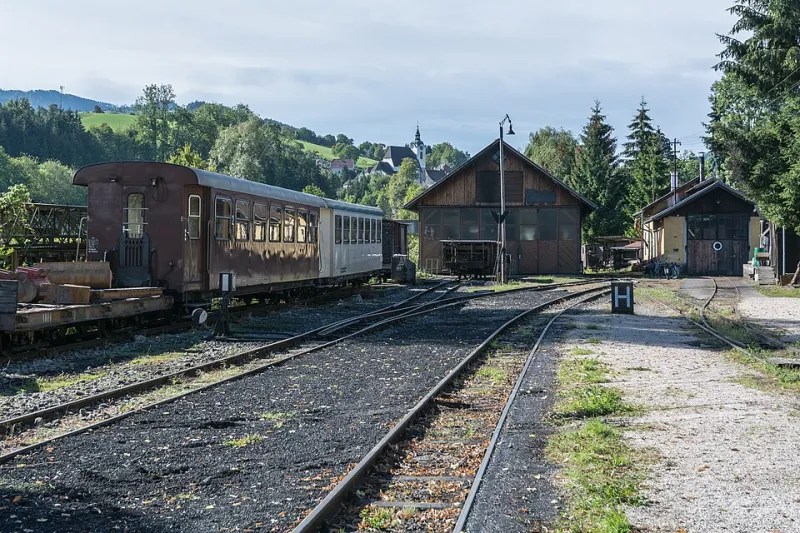
Photo: Isiwal, CC BY-SA 4.0, via Wikimedia Commons
There is a particular kind of silence in a heritage carriage before the public gets on. Dust in the window light. A handrail worn smooth by decades of gloves. Then the volunteer guard walks through with a clipboard and the silence ends. If you are dressing that carriage for a period drama, you are not in a studio. You are a guest in a moving museum that has a timetable, a safety case and a team of people who know every scratch.
The carriage has a day job
The first conversation is not about props. It is about access windows. A heritage line may run trains Wednesday to Sunday; a carriage may be in service Saturday and in the shed Monday. You need to know which vehicle is allocated, when it is coupled, when it is shunted, and when the cleaners need it back. Build your dressing schedule around the railway's diary, not yours. If the shoot needs a carriage on a running day, consider dressing only one end, or a bay, and keep the rest clear. The public may still be travelling. The train may still be photographed. Your period signage cannot say 'BRITISH RAILWAYS' while a 2026 family is boarding with a buggy.
Survey like a conservator, not a set dresser
Walk the carriage with the owner or volunteer custodian. Note original finishes: lacquer on handrails, varnish on panelling, upholstery, glass, brass, luggage racks. Photograph every fixing point. Ask what can be touched, what can be tied to, what can be hung from. Record the no-go list. This survey becomes your method statement. The best dressing plans for heritage stock are boring on paper: felt pads, soft ties, free-standing boards, no adhesives on original surfaces. The handrail does not get painted. It does not get sanded. It does not get a quick age wash. It gets left alone.
Signs that come off clean
Period signage is where most damage happens. A station name board or a 'NO SMOKING' card can sell the era, but tape and low-tack vinyl are not neutral. On old lacquer and varnish, even removable adhesive can leave a shadow or lift a flake. Use free-standing signs wedged into the luggage rack with felt-lined blocks, or clip-on frames that grip a non-original shelf. On glass, suction cups are usually safer than adhesive; test one overnight. For window bills, print on thin card and hang from a cotton thread across the glass, not stuck to it. If you need a sign on a door, make a removable strap-on panel that wraps around the door edge with felt inside. No screws. No staples. No blue tack on varnish.
Soft dressing, hard constraints
Seat throws are the quickest way to change a carriage. They are also a fire and comfort issue. Loose covers should be cotton or linen, not shiny synthetic, and they should be tied at the back with cotton tape, not elasticated over original upholstery. Test for dye transfer on a hidden corner. Keep them clear of door runners, heater vents and emergency handles. In a working carriage, the aisle is an escape route. Nothing can block it. Luggage racks can take period suitcases and hat boxes, but weigh them first. A full trunk on a rack is a missile in an emergency stop. Use lightweight dummy luggage for high racks, and put the heavy hero cases on the floor in a corner, secured with non-slip mat and a discreet strap to a non-original leg. The guard will thank you.
Grime maps, not grime everywhere
Dirt is not a texture; it is a map. On a heritage carriage, the real grime is already there, and it is often protected. Do not add more to original surfaces. Instead, draw a grime map: door handles, window sills, the top edge of seat backs, the floor by the lavatory door. Then dress the set to support those zones with lighting and soft goods. If the owner allows it, use removable water-based glaze on non-original sacrificial boards or on glass film that peels off. Never on lacquered wood. Never on upholstery. For a hero close-up, a small piece of non-original trim can be aged and swapped in, then swapped out. The rest is suggestion.
The volunteer factor
Volunteers are not obstacles. They are the continuity department. They know which door sticks, which window drops, which seat is original to the vehicle. Bring biscuits. Listen. Ask before moving a tool. Keep your cases off the workshop floor. If a volunteer says the carriage cannot be shunted before 10am, believe them. Offer them a copy of the dressing plan and a named contact. On the day, keep a clean boundary between your kit and their tools. And if a child from the preservation society wants to watch, let them; they may be the next custodian.
The Saturday handover
The last hour is not about the shot. It is about the handover. Walk the carriage with the custodian. Remove every piece of tape, every label, every hidden tie. Check luggage racks, under seats, door pockets. Photograph the carriage as you found it. Sign the condition report. Leave the handrail alone. Then watch the Saturday service pull out, with a 1950s suitcase in the rack and a 2026 family in the next bay. That is the job: not a perfect museum, but a believable one that still works.