The Full English Has a Call Time: Food Continuity on Set
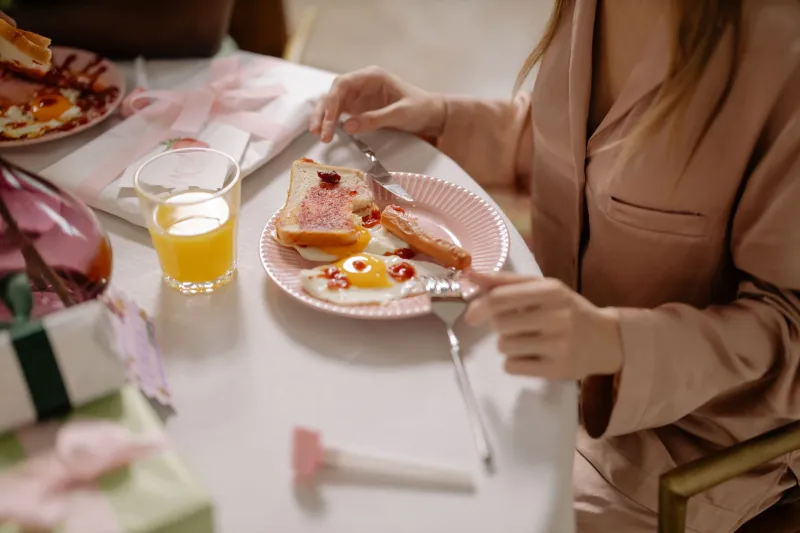
A fry-up on camera is not breakfast. It is a timed event with a call sheet, a backup plate and a runner standing by with a cool box. On a UK shoot, hero food has to look alive for hours, survive lighting rigs and stay matched from wide shot to close-up. That is before anyone asks whether the actor can actually eat it.
The plate is a prop with a pulse
Food continuity sits awkwardly between props and catering. A prop master will tell you the plate is a prop; a food stylist will tell you it is a performance. Both are right. The hero meal needs a look, a lifespan and a paper trail. A breakfast fry-up is a good test case: eggs firm up, toast darkens, beans skin over and bacon turns from glossy to greasy under a softbox. The plate that looked perfect at 8am can be a continuity error by 11am.
The answer is not one perfect plate. It is a system: a hero plate for the close-up, a stand-in plate for lighting and rehearsal, and a backup that matches the hero closely enough to cut between. On bigger jobs, the food stylist and prop master agree who owns what. Props may supply crockery, cutlery and tray; styling supplies the food and the edible continuity. The handover needs to be clear before the first take, not after lunch.
Stand-ins, backups and the spit bucket
Not everything on set should be edible. Silicone eggs, resin toast, wax beans and fake ice are standard kit for wides and background plates. They hold their shape under hot lights and do not need a fridge. The trick is to keep the fake food out of the close-up and the real food out of the long wait. A stylist might dress a wide with silicone, then swap in the edible hero for the cutaway.
Actors need a plan too. Some will eat on camera; many will not, especially over multiple takes. A spit bucket should be within reach and out of frame, with tissues and water. If the scene involves allergens, the conversation moves from continuity to safety. Allergen sheets, ingredient labels and a clear no list should be with the stylist and the first assistant director. Real peanuts, shellfish or sesame do not belong in a hero prop unless the production has signed it off properly. The paperwork is not glamorous. It is what stops a clever visual trick becoming an incident.
Cold trays and the untouched chip
Heat is the enemy. Set lights dry food, melt chocolate and turn a pub meal into a sad pile of beige. Food stylists use cold trays, gel packs and insulated boxes to hold plates between takes. Some will keep the hero plate refrigerated until the last possible moment, then bring it in for the shot. Others undercook slightly so the food finishes under the lights rather than before them.
Chips are their own genre. A chip that is crisp on the first take can be limp by the third. Stylists often fry a batch just under, keep it warm and dry, then refresh the hero portion for the close-up. Beans get a tiny splash of water or oil to bring back gloss. Toast is replaced rather than revived. Pub meals are harder because gravy, salad and bread all age at different speeds. A common trick is to build the plate in layers: the solid base first, the saucy element last, and the garnish added immediately before the camera rolls. The goal is not to fool the audience into thinking the food is fresh. It is to stop them noticing that it is not.
Paperwork that saves the edit
Food continuity lives and dies on photographs. The continuity supervisor or script supervisor needs a clear shot of every hero plate from overhead and from the camera angle. The food stylist should keep a simple log: time, plate number, what changed, what was replaced. If a chip is swapped between takes, write it down. If the actor takes a bite, note where from. The edit will find the difference even if the monitor did not.
Temperature logs matter for edible food, especially on longer days. So do fridge and cool-box logs if food is being stored on location. Labels should include the time and the owner. A plate without a label is a plate waiting to be moved by someone who thinks it is lunch. The prop master and stylist should agree a no-touch zone around the hero table. It sounds fussy until the runner clears the beans.
A kit that earns its van space
A workable food continuity kit includes gel packs, a cool box, kitchen roll, tweezers, cotton buds, a small oil spray, glycerol, food colour, fake ice, labels, a thermometer and a folder for allergen sheets. Add a lint-free cloth for plates and a few neutral backups: plain toast, plain chips, a bowl of peas. The best kit is boring. It solves the same five problems over and over: heat, time, matching, safety and someone eating the evidence.
At SDS Props, the interest is in the craft that keeps a scene believable. Food is part of that. It is a prop with a pulse, and on a UK shoot it needs a call time just like everyone else.