Boots by the Door, Oranges on the Bench: Building a Grassroots Dressing Room That Breathes
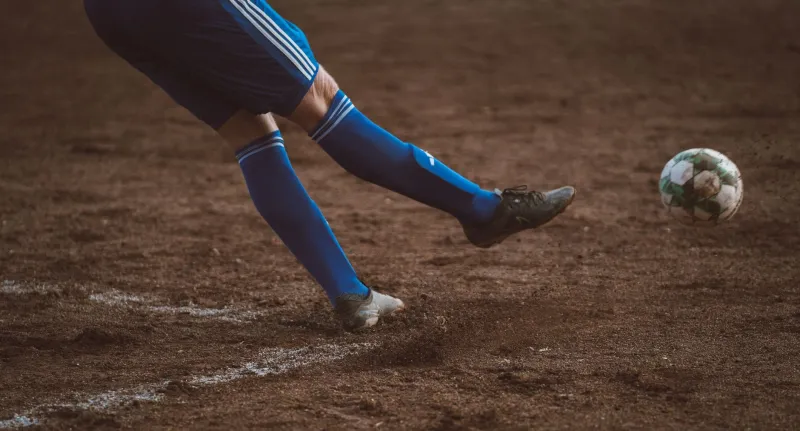
There is a particular smell to a grassroots changing room. Damp concrete, Deep Heat, a radiator that has been on since 7am and something faintly agricultural coming off the boots. You cannot film the smell, but you can build a room that makes an audience fill it in. That is the job here: not a museum of Sunday football, but a working room that looks like eleven blokes have just tramped through it and will do so again next week.
Start With the Room, Not the Kit
Most UK council-built changing rooms are wonderfully unpromising: breeze block, gloss paint in a colour chosen by committee, a long wooden bench, a strip light with one tube out, and a floor that slopes towards a drain. That is your set. The mistake is to dress it like a professional club — lockers, name plates, folded towels. Grassroots is functional. The bench is where the kit bag goes, the peg is where the shirt goes, and the floor is where everything else ends up.
Build the room's history in at shoulder height. That is where bags scuff the paint, where heads lean back against the wall, where a hundred sat-down arguments have left their mark. A little scuffing goes a long way. Too much and it reads as a stage set; too little and it reads as a show home.
The Peg Hook Is a Character
Numbered peg hooks are the backbone of the room. They should not match. Some are original, some are replacements from a hardware shop, one is held on with gaffer tape and hope. Hang a few things and leave gaps: a lost glove, a whistle on a lanyard, a coin on the shelf. Resist the urge to fill every hook. A dressing room mid-season has gaps in it — players who have left, players who are late, players who have forgotten their kit again.
If the script needs a hero peg, build it. A hook that a character always uses, with a bit of wear underneath from a boot toe, gives the camera something to return to. It also helps continuity: you know exactly where that shirt lives.
Building Wear You Can Reuse
Mud is the continuity nightmare. You cannot have a character arrive caked and leave spotless unless the story says so, and real mud behaves differently every take. The answer is pre-built boot states. Make three pairs per character: clean, match-worn, and properly filthy. Dirty them in the workshop with a mix of cocoa powder, fine soil, cold tea and a little glycerine for that wet sheen. Seal the result so it does not transfer to costume or floor, and keep each state in its own labelled bag. On the day, you swap boots rather than paint them.
Towels are the same problem in a softer form. Buy twenty identical cheap towels and age five of them. Keep one hero towel for close-ups and rotate the rest. Wet towels should be genuinely damp but sealed in bags between takes so they do not dry into crisp shapes. If the scene calls for a towel over a shoulder, have two: one for the wide and one for the insert, because the wide will get dropped.
Liniment rings are the detail that sells the room. That pale ring on the bench where a bottle has stood for years is more evocative than any poster. Build it on the bench surface with a stencil and a tinted lacquer, or watercolour sealed under a matte varnish. Do not use real oil on set. It stains costumes, makes floors lethal and will follow you into every subsequent scene.
The Team Sheet Is the Hero
The team sheet pinned to the wall is the closest thing a grassroots dressing room has to a plot document. It should look handwritten, hurried and slightly wrong. Print names and positions on cheap 80gsm paper, then go over them in biro. Add a substitution scribbled in the margin, a coffee ring, a doodle of a formation that nobody will follow. Age it with cold tea and dry it flat, then pin it with drawing pins at slightly different angles so one corner curls.
Make three versions: the clean midweek sheet, the matchday sheet with the late change, and the half-time sheet with the tactical note. That gives the director options without asking the art department to reprint at lunch.
Consumables and Continuity
Half-time oranges are a prop with a clock on them. Slice them fresh, keep them in a lidded tub with a little water, and rotate three tubs across the day. A dry orange slice looks like a prop; a wet one looks like half-time. Water bottles should be generic — no brands, no club crests unless you have cleared them. If a label is important, build a hero bottle with an in-world brand and keep it out of the mud.
Heat rubs and liniment bottles are a trademark risk. Decant into unlabelled bottles or make your own labels, and check clearance before anything recognisable faces camera. The same goes for kit bags and carrier bags. A supermarket bag is a very British detail, but it is also a logo. Have a plain alternative ready.
Sourcing Without Being a Pest
Real clubs are the best reference and the best source. Ask permission, offer a donation to club funds, and credit them if they want it. Photograph rooms on a normal Sunday morning rather than a matchday, when nobody is in a hurry. Do not lift a club's actual history — the team photo, the trophy, the shirt on the wall — without a conversation. Grassroots rooms are built, not hired, but prop houses can fill the gaps: old benches, metal pegs, enamel signs, the right kind of bin.
What to Leave Out
Leave out the inspirational quote on the wall. Leave out the perfect row of matching boots. Leave out the Hollywood locker room with its name plates and soft lighting. Sunday league is a room where someone has written the kick-off time on the back of an envelope and stuck it to the door. Build that, and the audience will smell the liniment without you having to show them the bottle.
The Kit List
- Numbered peg hooks, mismatched and slightly loose
- Long wooden bench with built-in liniment rings
- Three boot states per character, sealed and labelled
- Twenty towels, five aged, one hero
- Team sheets: midweek, matchday, half-time
- Lidded tubs for oranges and a rotation schedule
- Generic water bottles and unlabelled liniment bottles
- Drawing pins, biro, cold tea and a little patience
The room does the work. You just have to let it look used.