The Foreman's Mug Doesn't Match: Kitting Out a Site Cabin People Believe

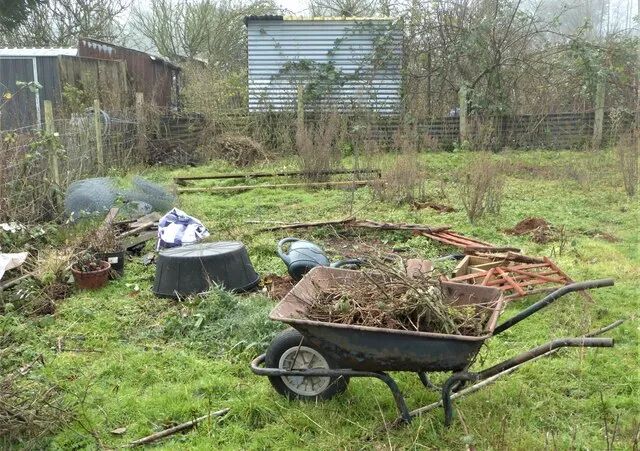
Photo: Richard Sutcliffe , CC BY-SA 2.0, via Wikimedia Commons
Every site cabin smells of the same four things: wet hi-vis, diesel, instant coffee and toner. Nobody can quite say why the toner, but it's there.
If you can get an actor to walk in and unconsciously duck the doorframe, you've already done the hardest part. The rest is sourcing, paperwork and a serious conversation about mugs.
Read the Cabin Before You Fill It
Hire stock gets you four walls and a table bolted to the floor. Everything after that is a decision. Before anything goes in, work out what the cabin has inherited — the noticeboard nobody has cleared since the last phase, the chair that came from a skip, the wall map that's out of date and has been left up because taking it down would mean admitting something.
Real cabins are full of furniture nobody chose. If your cabin looks like it was furnished in one trip, it's wrong. The table should be the hire one. The chairs should be three different chairs.
The Mud Line
This is the single hardest continuity problem on any site set. Workers bring the ground in with them, and the ground changes as the day goes on and the weather changes with it.
Decide, before the first take, exactly how muddy the floor gets in the two metres inside the door. Photograph it. Then protect it with a mat of the right size and a boot-scraper that's been there so long it's set in. Mix your mud in advance in a tub, keep it covered, and match it to the exterior ground on the day rather than to what it was last Tuesday.
Boots are the other half of it. Real site boots are scuffed across the toe cap, creased at the flex point, and caked at the sole edge. If you buy new ones, you have to actually wear them in. Cheaper and better to buy used boots from an auction lot and give them a clean and a re-lace.
Paperwork Is the Set
A site office is a room built out of paper. RAMS in a plastic wallet. Toolbox talks with a signature sheet that's been filled in by one person on behalf of eight. A permit board with tabs. A punch list in biro. A drawing rolled out on the table with two mugs holding the corners down.
This is the same discipline as hero paperwork anywhere else: names that stay consistent, dates that match the shoot, a login sheet where the same handwriting appears twice. Small things, but a camera that drifts across a wall of notices will find your laziness in seconds.
Laminates are your friend. Print, laminate, curl the corner, and add a second laminate over the top of the first where somebody updated a phone number.
The Mug Hierarchy
Matching mugs read as a hotel. Nobody on a UK site has ever drunk out of matching crockery unless the client was visiting.
The good mug lives in the cupboard and comes out for the contracts manager. The rest are a museum of personal acquisitions: a holiday mug, a mug with a name on it that isn't anyone currently on site, one chipped badly enough that it's relegated to brushes. The foreman's mug should look like it has never been washed in a dishwasher and never will be.
This is not a joke about props — it's the fastest way to show rank without a line of dialogue. Watch who makes the tea round in your scene. Whose mug gets handed over first. Who doesn't get asked.
PPE and the Safety Realism Problem
On-screen realism and on-set safety are two separate conversations, and it's worth saying so plainly. Dressing wants hi-vis with the reflective band cracked and the sleeves black at the cuff. Safety wants everyone in correct, visible kit at all times. Those can coexist — you just need to plan it, brief it, and keep a clean set for the performers and a distressed set for the background.
Hard hats are the giveaway. Real ones hang on a hook by the door, get sat on, get written on, and have a name in marker inside the band. Nobody wears one at a desk. Gloves live in a pocket or on a radiator. A pristine hi-vis on a character who's been on site since six is the fastest way to lose the room.
Radios, Chargers and Cable Spaghetti
A cabin's power strip is a set dressing in itself. Phone chargers of four different vintages. A lead that goes nowhere. An extension reel coiled badly. The kettle and the microwave competing for the same socket, with a sticker above it in capitals about not overloading.
Radios matter too. A DAB radio on the windowsill with the aerial bent, tuned to a local station, volume low. It gives the sound department a practical source and gives the room a pulse.
Sourcing the Things That Can't Be Faked
Buy used wherever you can. Ex-site suppliers, auction lots, and the retirement clear-out of an actual site manager will beat anything you can build. A fabricated noticeboard never quite reads; a noticeboard that came out of a real cabin in Wakefield, complete with three years of staples, always does.
Keep a running kit list you can re-hire from: signage wallets, permit boards, a box of mixed PPE, boot scrapers, a tub of mud, a set of keys on a curly cable. That box will earn its keep on every job that involves a man in a hi-vis saying the word 'programme'.
The Politics in the Small Objects
Finally, remember that a cabin is a room where people negotiate status all day. Who has the keys. Who has the marked-up drawing. Who has the good chair. Who gets interrupted.
Give your actors something to hold and something to be territorial about, and the scene will play itself. The kettle has a backstory. So does the mug. So does the bit of the table where the drawings live. Dress those and the rest of the room will look after itself.