Tuesday, 6:55am: Dressing a Street Where the Bins Are the Supporting Cast
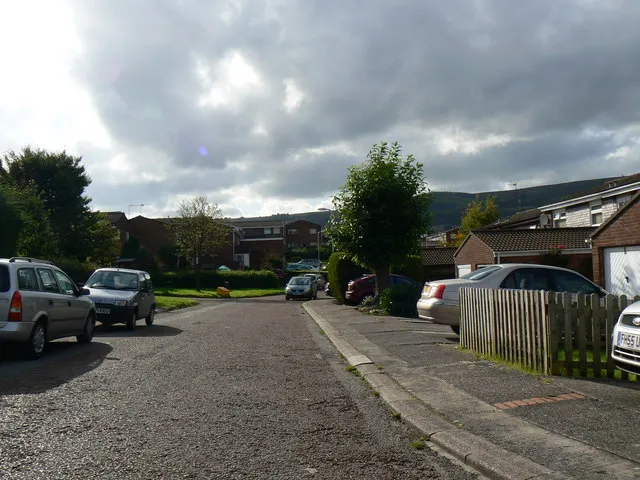
Photo: Colin Madge, CC BY-SA 2.0, via Wikimedia Commons
Every street has a Tuesday morning rhythm. A door bangs. A recycling box scrapes across concrete. Someone in a dressing gown wrestles a wheelie bin to the kerb, then remembers the food waste caddy. A van pauses at the corner. The whole thing lasts about ninety seconds, and it is one of the hardest bits of dressing to get right on screen.
At SDS Props, we like a street scene that does not announce itself. No stylised rubbish, no artfully arranged bin bags, no pavements that look swept by a production designer. The goal is quieter: make a UK residential road read as genuinely inhabited, then let the bin-day choreography do the storytelling.
The call sheet is the choreography
Bin day is not a look. It is a sequence. Treat it like a movement call. On a shoot day, decide where each household is in its own private bin-day timeline. One house has already been collected and the bin is back against the wall, lid ajar. Another has missed the lorry and left a sad grey box out. A third is midway through: bags by the gate, recycling stacked, car still half on the drive.
That timeline gives you continuity. It also stops the street looking like a showroom. If every bin is out at the same angle and every bag is tied the same way, the audience reads set dressing. If one household has two boxes, one has a sack, and one has clearly given up and put everything in the wheelie bin, the road starts to breathe.
Build a simple paper map: house number, bin type, position, lid state, bag count, car position. Photograph each station at the start and end of the day. Bins move. That is their job. Your continuity binder has to move with them.
Bins are regional, and UK viewers know it
This is where generic dressing falls over. Bin colours, box styles, collection rules and lid colours vary across the UK. A blue bin in one council area is recycling; twenty miles away it is rubbish. Some authorities use sacks, some use wheelie bins, some use stackable boxes with lids that never quite fit. If your street is set in a specific town, check the local scheme. If it is not, pick a logic and stick to it across the whole road.
We keep a small library of bin bodies, lids, boxes and bags for this reason. We also keep labels. A printed house number on a bin, a faded sticker for garden waste, a scrap of masking tape with a surname on it: these tiny identifiers do more than a whole skip of dressing. They suggest ownership, which is the whole game.
The same goes for bags. UK bin bags are not all the same. There is the thin supermarket carrier that has been reused, the heavy-duty black bag, the clear recycling sack that reveals exactly how much packaging a household consumes. A few bags should look heavy. A few should look light. None should look like they were placed by a stylist with a ruler.
Pavement clutter is a continuity problem with legs
Cars, cones, planters, A-boards, grit bins, dog waste bins, dropped kerbs, cracked paving, weeds at the wall. These are the things that make a street feel real, and the things that will ruin your day if you do not plan them. A parked car is a prop. It has a position, a dirt level, a tax status in the story and a wing mirror that someone will knock. Mark its wheels. Photograph its reflections. Decide whether it moves between scenes or stays put.
Pavement clutter needs a light touch. A street where every house has a matching planter looks like a garden centre display. A street where one house has a wonky gate, one has a wheelie bin store, and one has a stack of Amazon boxes waiting for collection feels like a road where people actually live. Add leaves, grit and a few patches of damp. UK pavements are rarely showroom-clean, especially from October onwards.
Net curtains, condensation and the audience radar
Windows are part of the dressing, not just the background. Net curtains at different heights, a blind half down, a bathroom window fogged with condensation, a sill with a sad cactus and a takeaway menu. These details tell the audience who lives there without a single line of dialogue. They also need continuity checks. If a window is lit in one scene and dark in the next, someone will notice. If a net curtain is pulled back for a key moment, it has to stay pulled back or be reset deliberately.
UK audiences are particularly sharp on this stuff. They know what bin day looks like. They know that recycling boxes do not stack neatly in a force ten. They know that a bin bag left out in the rain gets heavy, splits, and leaves a stain. That is the standard you are working to. Not perfect. Believable.
Weather is not a postscript
British weather will test every bin on the street. Wind tips boxes. Rain fills lids. Bags leak. Labels peel. If the scene is meant to be a dry Tuesday, you need weights, ties and a plan for the fact that the real Tuesday is horizontal drizzle. We use discreet weights in boxes, double-sided tape on labels, and duplicate hero bins for wet-weather resets. Keep a drying area and a towel supply. Keep a note of which bags are allowed to look damp and which are hero clean.
Puddle maps help. So does a simple rule: if the weather changes, change the story, not just the props. A bin knocked over in the wind is a gift. A recycling box with a soggy cardboard flap is a detail. A street where everything stays perfectly upright in a gale is a set.
The most ordinary street dressing is often the hardest to get past a UK audience because they have the reference material in their own heads. They have stood at the kerb in a dressing gown. They have chased a lid down the road. Get the choreography right, and the bins disappear into the background where they belong. Get it wrong, and the whole road reads as a set with a bin problem.