The Tree Is Supposed to Lean: Building a Festive Sitting Room That Looks Lived In, Not Merchandised
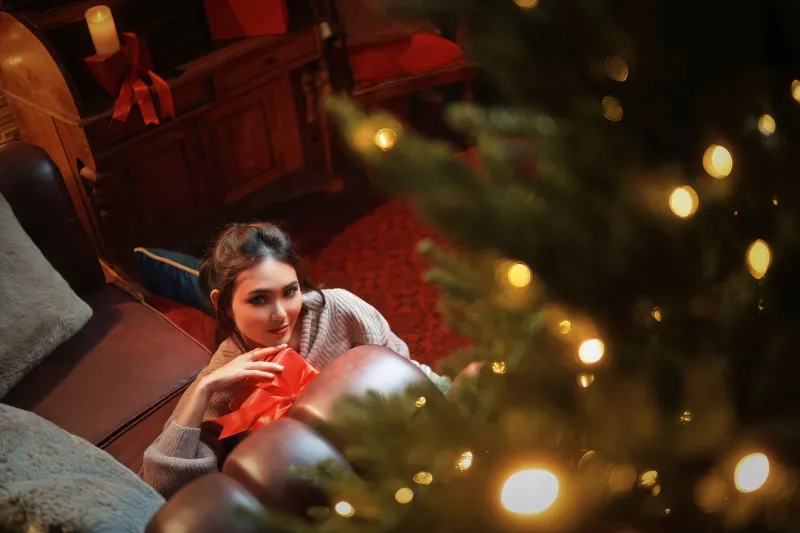
The Christmas advert sitting room is a strange beast. It has to look familiar enough that half the country nods at the sofa, but worked enough that a camera can move through it for 90 seconds without catching a stray extension lead or a bauble that vanishes between takes. In 2026 the brief is rarely catalogue gloss. It is usually warmth, a bit of wear, and the suggestion that somebody in this house has strong opinions about where the angel goes.
That means the job is not decorating. It is dressing a room to behave like a room. The tree can lean. The tinsel can clump. The fairy lights should not look like they were installed by a lighting technician with a zip tie habit, even when they were.
Start with the room, not the tree
Before anybody unwraps a single string of lights, look at the location as a filming space. Where are the sockets? Which corner gives you depth without blocking the camera track? Is the window going to blow out the hero decorations at 4pm in November? Most festive living rooms are dressed around one hero corner: tree, fireplace or radiator, sofa edge, and a bit of hallway visible through a door. That corner needs to read in a wide shot and survive a close-up.
Practicality comes first. Cables need routes. Practicals need switching. Anything borrowed from the location needs protecting. If it is a real family home, we are not putting pins in wallpaper or gaffer tape on fresh paint. Clamps, weights and museum putty do most of the heavy lifting. The room should look untouched when we wrap; the only evidence should be a slightly better arrangement of cushions.
Source tinsel with a past
The fastest way to kill festive realism is a matched set. A tree where every bauble came from the same box looks like a shop window. A tree where half the decorations are inherited, half came from a charity shop in Leeds and one is a painted loo roll from a school project looks like a home.
We source from car boots, charity shops, eBay lots and the back of the props store. Mixed eras are good. Faded tinsel is good. A slightly squashed paper chain is very good. What is not good is anything that fails a basic safety check. Old fairy lights get tested or binned. Frayed flex does not go on set because it looks authentic. Tinsel near a heat source is a conversation nobody wants to have with the fire officer.
Imperfection needs to be deliberate. We might wire a strand of tinsel so it droops off the mantel in a way that reads as three Christmases of gravity, but it is still fixed at both ends. The room can look chaotic; the rig cannot be.
The tree should look argued over
A hero tree usually gets a lean, a bare patch and at least one decoration that is too low because a child put it there. The top might be a bit sparse. The lights might be denser on one side because that is the side the camera sees. None of this is accidental by the time it reaches set.
We wedge the stand, tie off the trunk if needed, and keep the hero side clear for the camera. Baubles that appear in close-ups get photographed and numbered. If a decoration is meant to be handmade, it needs to look handmade rather than bought handmade. Glue lines, wonky lettering and a bit of glitter fallout are useful. A pristine salt-dough ornament is just a prop pretending.
Fairy lights that behave
Practical fairy lights are one of the great small lies of set dressing. They need to look like a messy string bought in a hurry, but they need to be controllable. Warm white LEDs on separate circuits are the usual answer. A dimmer lets the gaffer bring the room down without losing the sparkle. Battery packs and 12V runs hide behind furniture where a 13 amp extension lead would never fit.
Cable routing is unglamorous and essential. Black cable disappears against dark furniture; clear cable can be worse than useless on a pale wall. We use clips, cable ties and honest hideaways rather than tape on antique paintwork. Every practical string gets tested, PAT checked where required, and kept away from anything that heats up. LED candles are standard. Open flame is a last resort and usually a short conversation.
The goal is a room that glows from within, not a room lit by a string of lights with a visible transformer under the tree. If the camera sees the transformer, we have failed.
Fake snow and the continuity problem
Fake snow is where festive dressing gets messy. Snow spray on windows looks great for one shot and disastrous by take six if somebody touches it. Flocking on foliage sheds. Loose snow blankets migrate across floors. The answer is a snow map: photograph every surface before the first take, note what is meant to be dusty versus drifted, and keep a small continuity kit with the same products.
We avoid glitter near eyelines unless the shot wants it. Matte snow reads better on camera and does not turn into a thousand tiny continuity notes. Window snow gets sprayed in light passes, not one heavy coat. Snow on the doorstep stays out of the walking path so it does not become a grey smear by lunchtime.
The hero corner has to survive the edit
A Christmas advert living room is often shot out of order. The close-up of the mantel might happen before the wide of the tree. That means the hero corner needs a photo board, a light map and spares. Extra baubles. Extra tinsel. The same shade of fake snow. A note saying which fairy-light string is on which dimmer.
Even the fag burn in the sofa arm is a continuity prop. We paint it, applique it or dress it once and photograph it. Nobody needs a real cigarette near a dressed set. The room can suggest a party from last night without inviting an actual fire risk into the schedule.
By the time the director walks the camera path, the room should feel like a family has already argued over the tree, eaten the good biscuits and gone to bed. The lights are warm. The tinsel is slightly wrong. The snow is exactly where continuity left it. That is the trick: make the mess look easy, then make sure it does not move.