Half In, Half Out: Dressing the Domestic Set That's Already Leaving
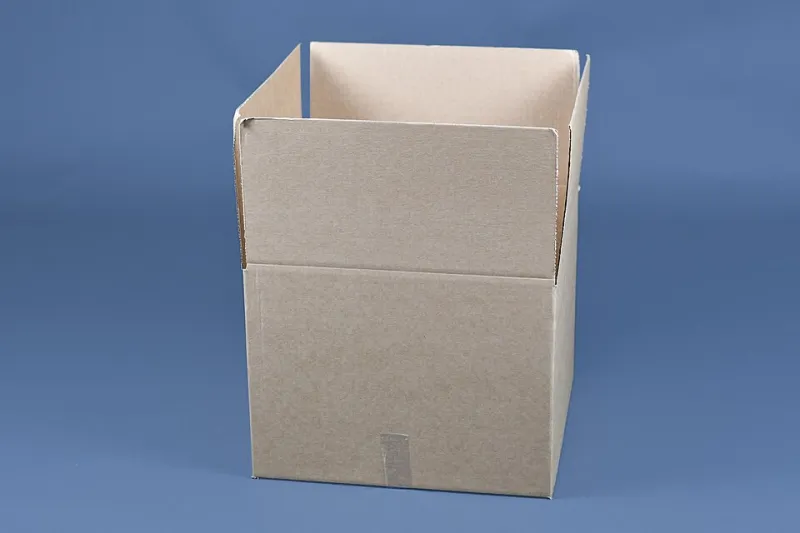
Photo: HireAHelper, CC BY 2.0, via Wikimedia Commons
There's a particular kind of domestic set that turns up in almost every British drama at some point, and it never gets its own credit: the flat that's halfway out of the door. Boxes stacked in the hall, curtains down, a kettle sitting on the floor because the worktop has already been claimed by a removal firm.
It looks easy. It is not. A mid-move home isn't chaotic — real moving chaos lasts about four hours and then resolves into a grim sort of order. What you're dressing is that order: a home that has been systematically dismantled by someone with a plan and a van booked for Thursday.
Get that wrong and the room reads as 'art department has been here'. Get it right and the audience doesn't notice the set at all, which is the whole job.
The Box Is the Prop, Not the Furniture
The single most common note on a transitional set is that the boxes don't behave like boxes. Cardboard is a prop with physics. If a carton is labelled KITCHEN — MUGS AND PLATES, it should take two hands and a bit of a lean to lift it, and the flaps should sag when the tape comes off.
Practical fixes that hold up on camera:
- Double-wall cartons, always. Single-wall boxes buckle under a stack of three and read thin on a wide shot. Removal firms sell on used double-wall stock by the bundle, which is cheaper than buying new and comes pre-scuffed.
- Weight them honestly. Offcuts, old magazines, bagged newspaper. A box that swings when lifted kills the illusion faster than a visible boom.
- Half-taped flaps. Nobody tapes a box shut and then opens it neatly. One strip across the middle, one corner lifting, a Stanley knife score along the seam.
- Marker, not printer. Handwriting in a chunky black marker — but not the same handwriting on every box. Two people are moving out; two pens, two styles, one box with a child's biro scrawl on it.
Labels do a lot of character work for free. 'BOOKS — HEAVY' tells us someone is organised. 'MISC' tells us someone has given up. 'MUM'S — DO NOT OPEN' tells us there's a backstory and we should probably leave it alone.
A Room-by-Room Plan
Hallway and stairs
This is where the volume lives. Flat-packed boxes against one wall, not both — you still need a walking route, and a corridor blocked to the skirting reads as a warehouse. Keep one box open with packing paper spilling out. Leave the coat hooks half-empty: two coats gone, the ghost of a third in the dust line.
Kitchen
The kitchen is the room that sells the whole conceit. Cupboard doors open on bare shelves. One shelf left stocked, because people always pack around the things they still need — the kettle, two mugs, a tin of tea. The kettle should be on the floor near a socket, flex trailing, and there should be a takeaway container or two in the bin. Nothing says 'last week in this flat' like a stack of polystyrene lids.
Living room
Curtains down, rail bare, and light coming in harder than the room has ever seen it. Picture hooks still in the wall with squares of unfaded paint beneath them — that one detail does more for a dressed wall than any amount of distress. The sofa is either gone (better) or pushed to an odd angle with a single cushion on it. A rug rolled and taped in the corner.
Bedroom
Mattress against the wall, bed frame in three pieces, a lamp half-wrapped in bubble wrap on the floor. Half-wrapped is the key word across the whole set — the difference between a prop and a packing job is that a prop is either fully wrapped or fully out. Real packing is full of things abandoned mid-task.
Bathroom
Empty shelf, one toothbrush, a bin bag with a towel poking out of it. Remove the bath mat. Bathrooms look wrong when they're too complete, and they look very wrong when they're dressed to look empty rather than abandoned.
The Bins at the Kerb
Wheelie bins are a gift to a set dresser and a trap for a continuity department. Bin colours and collections differ wildly between councils, so check the actual borough you're shooting in rather than assuming — and if you're using the real bins at a real property, get the collection day in writing. Nothing ruins a two-day schedule like a genuine refuse truck arriving at 7am and emptying your hero dressing.
For the bins themselves: flattened cardboard leaning against the side, a bag that doesn't quite fit under the lid, a skip permit taped inside a window if the production is generous. Add a bucket and a mop nobody's claimed yet.
Continuity Traps
The mid-move set is a continuity nightmare because everything on it is meant to be moving.
- Photograph the boxes, label side out. If a box says BATHROOM on day one, it can't say BOOKS on day three because someone rotated it.
- Wrapped to unwrapped is a one-way street. Track which items are wrapped in which scene, especially the lamp.
- The kettle never migrates. Decide its position and defend it. It will get moved by a runner who wants to plug in a monitor.
- Takeaway stock is dated. If you're shooting scenes out of order, the number of containers on the side needs to map to the timeline, not the shooting order.
- Watch the 'still needed' shelf. If it's been packed down by the end of the story, that's a deliberate beat — don't let it happen by accident.
Sourcing in the UK
Most of this kit is cheap and reusable, which is why it's worth building a dedicated removals crate in the store. Double-wall cartons and used bubble wrap from a local removal firm; tape guns and heavy-duty tape from Screwfix; dust sheets from Toolstation; marker pens by the dozen. Council bins come from the property itself or from a prop hire house that stocks regional variants. For anything with a printed removals company logo on it, get clearance or invent a company — a fictional firm is cheaper and safer than a real one.
Ruth Ackroyd on Clutter With Intent
Ruth Ackroyd is a set dresser working across Yorkshire on television and short film. We asked her what she's actually thinking about when she dresses a home on its way out.
What's the first thing you put in a mid-move room?
Boxes, before anything else. You need to know where the volume is before you know where the camera can stand. Then I take things away, which is the opposite of what people expect. It's a subtraction job.
How do you stop it reading as staged?
Uneven labour. One person in that household packs beautifully, one person shoves things in a bag. If every box is perfect, you've built a set about a removal company, not a family.
And the character stuff?
I always build one small box that's clearly going to the new place rather than into storage. A plant, a folder of paperwork, a decent mug. It's four items on a shelf and it tells the audience this person has a plan. Sometimes the director doesn't even shoot it. But the room knows.
The Last Box
Dress the space so it's ready to be left, not ready to be lived in. Leave a route through the hall, keep the light harsh, resist the urge to fill the gaps — the gaps are the story. And put a chair out for the watchful eye, because someone has to sit down somewhere while the van gets loaded.