Windbreaks, Wet Rings and the Crisp Packet That Wouldn't Die: Building a Pub Garden That Behaves Like a Local
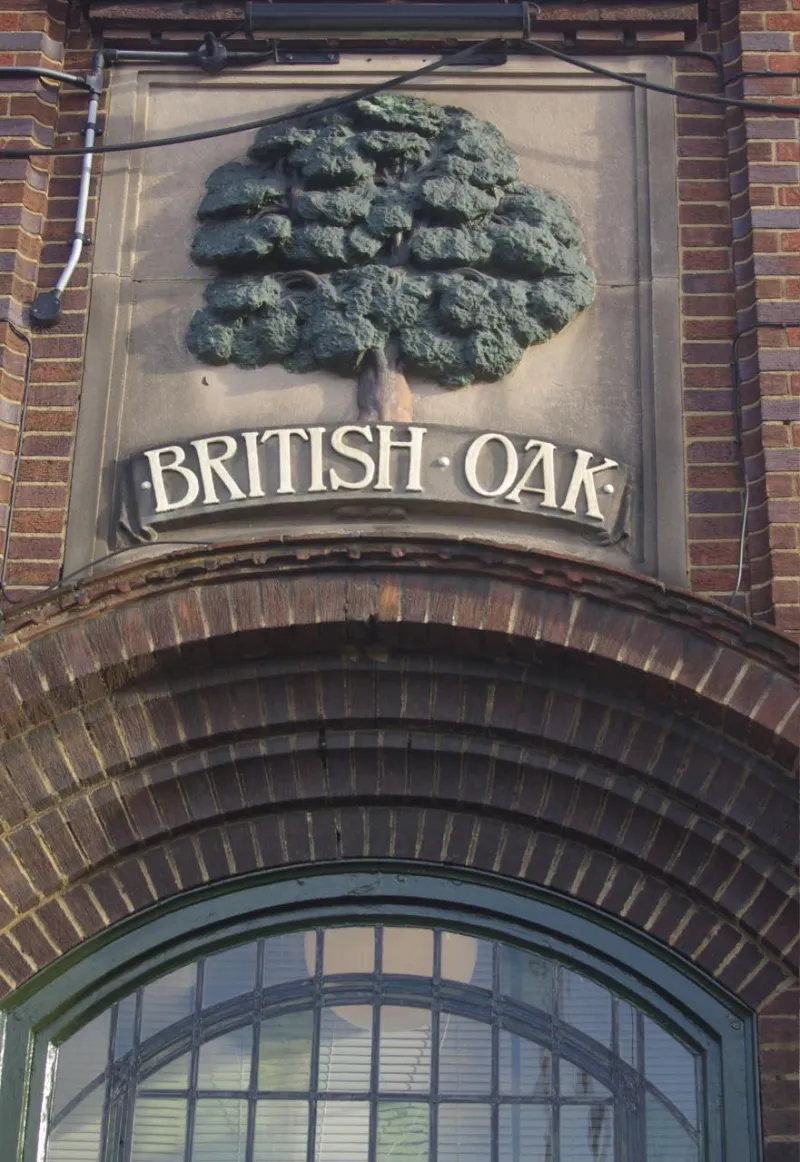
Photo: Stephen McKay , CC BY-SA 2.0, via Wikimedia Commons
There is a particular kind of British pub garden that cameras love and art directors dread: the one that looks like it has been there since the car park was gravel, not styled for a beer ad. You know the sort. A bench that wobbles unless you sit in exactly the right spot. A laminated menu with a corner missing. An ashtray that has seen better decades. And a pint glass, half-finished, with a ring underneath it that nobody has wiped up.
That is not mess for the sake of mess. It is a table-top ecosystem, and it is the difference between a set that reads as a real local and one that reads as a furniture showroom with hanging baskets. This is how we approach it in the workshop and on location.
Start with the table, not the pub
It is tempting to dress the big stuff first — the pergola, the planters, the chalkboard A-board by the gate. But the garden lives or dies at elbow height. When the camera settles on two characters having a quiet one, the table is the whole world. So we build the table first and work outwards.
That means starting with the surface itself. A pub garden table is rarely clean. It has grain, scratches, a faint tide mark from a spilled Coke, maybe a burn from a disposable barbecue that got too close. We age tabletops in the workshop with a mix of fine sandpaper, weak tea and a little matte varnish knocked back with wire wool. The aim is not to make it look antique. It is to make it look used on a Tuesday.
Then we layer. Base cloth if the table has one. A menu in a plastic sleeve, slightly clouded. An ashtray that does not match the others. A dog bowl under the bench, half full. A packet of crisps, opened, folded once, abandoned. A beer mat that has gone soft at the corner. A set of keys. A phone face-down. Each item is a small piece of evidence that someone was here and will be back.
The ashtray rule (and why mismatched is right)
A pub garden with identical ashtrays on every table looks like a chain hotel terrace. Real gardens accumulate. One table has a heavy glass ashtray with a chip on the rim. Another has a cheap metal one that has gone dull. A third has a small ceramic dish that was probably meant for olives. That mismatch is not sloppy — it is history. It says the landlord buys them in twos from a cash-and-carry and loses them at the same rate.
We keep a crate of about twenty ashtrays in the prop store, sorted by weight and wear. Heavy ones for exterior tables where wind is a factor. Light ones for interior cutaways. Anything with a logo gets checked for clearance. And every ashtray that goes out gets a continuity photo, because the moment an actor stubs one out, the next take needs the same amount of ash in the same place.
Menus, condensation and the half-finished pint
Laminated menus are a gift to set dressers because they age so convincingly. Sun bleaches them. Grease clouds the plastic. A corner curls. We usually have three versions of the same menu: fresh for the interior bar, sun-faded for the garden, and a slightly crumpled one for the table that looks like it has been read and rejected.
The half-finished pint is the hero prop of the garden. It needs to look like it has been sitting for ten minutes, not two hours. That means the right level of condensation, a small head of foam that is just starting to collapse, and a ring on the table underneath. We use a fine mist spray for condensation and a dab of washing-up liquid on a sponge for the ring. The glass itself is usually a prop-safe resin or a real glass with a silicone base, depending on the action.
Crisps are trickier. An open packet has to look abandoned, not placed. We fold the top once, crease it, and weight the base with a small hidden coin so it doesn't blow away between takes. The crisps inside get swapped every few hours because they go soft under lights. A soft crisp reads as fake on a close-up.
Wind, rain and the moving sun
A pub garden is an exterior set, which means the weather is a scene partner whether you like it or not. Wind is the enemy of every light prop. We keep sandbags, small lead weights and clear museum wax on the dressing cart. Menus get a tiny strip of double-sided tape underneath. Beer mats get weighted. Ashtrays get the heavy glass versions. Anything that can flap — a hanging basket tag, a paper napkin, a chalkboard sign — is either fixed or removed.
Rain is a continuity problem dressed as a dressing problem. If the scene is set in a drizzle, the tables need to look wet in the right way: beads on the varnish, a darker patch where water has pooled, a dry patch under the umbrella. We map puddles before the first take and photograph them. If the sun comes out, we have to decide whether the scene is now a sunny one or whether we are wetting down between setups. That decision usually belongs to the director, but the dressing team has to be ready either way.
Light changes fastest in the late afternoon, which is exactly when a pub garden looks best. We try to schedule the wide shots early and the table close-ups later, but the sun does not always cooperate. A small bounce card and a diffusion frame can keep the table-top ecosystem consistent while the background does its own thing. The trick is to keep the ashtrays and the pint in the same relative position so the audience never notices the light move.
The dressing cart that saves the day
Every garden shoot gets a cart with the same kit: spare ashtrays, spare menus, a spray bottle, a cloth, museum wax, sandbags, clear tape, a small brush, a continuity camera, and a bin bag for anything that gets too damaged to use. It is not glamorous. But it is the difference between a table that holds up for six hours and one that starts looking like a jumble sale by lunchtime.
A good pub garden set does not announce itself. It just sits there, slightly untidy, quietly believable, with a half-finished pint and a crisp packet that refuses to die. That is the job. And when it works, nobody notices the dressing at all — they just believe the pub.